A woman’s anatomy is the first sign of her mothering. A woman is distinguished by her anatomy which differentiates her from men — the only other human being. The natural affinity of her female organs is to hold, which translates into her innate nurturing skills, since “holding” is one of the activities women engage when they consummate, carry, and rear children. Furthermore, her reproductive cycle is constant. Barring surgical removal, this cycle prepares her body to reproduce until she reaches menopause when her hormonal anatomy informs that she will no longer capacitate reproduction.
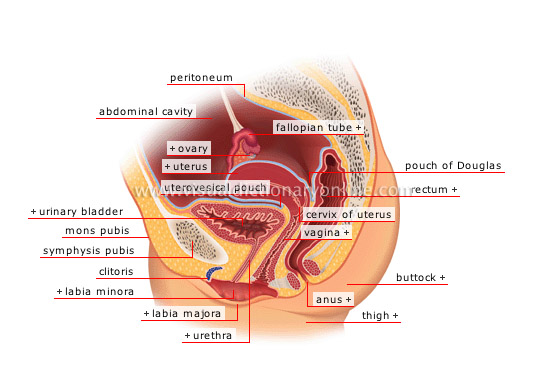 Female reproductive organs housed in a central area of her body.
Practically, a woman’s reproductive organs are protected — invisible,
internal biology, which (in most cases) are born with her. Except for her external, physical appearance, who would know of them? Her apparent shape, form, and look — supports the conclusion that these organs are within her — contrasting male-ness. So, biologically speaking: women look like women, and men look like men.
 Alice Ukoko founder CEO of ‘Women of Africa’: Portraits of participants at a conference organised by Greenpeace, on the effect oil extraction has on the lives and cultures of indigenous peoples living in the area.
A young girl, even though physically underdeveloped, is seen as a female who can and will nurture. Her own nurturing begins differentiated between mother and father dependent upon circumstances, events, or situations that impact her development and growth. However, the inclinations to raise a girl verses the inclinations to rear a boy, are applicably different both psychologically and intellectually largely based on social rather than human standards that support and uphold the rights of females and males to be who they are first (biologically), and, after that, what they become (intellectually) (genesinheritencerev3.shtml).
 iamartofmothering